Showing posts with label Car Camping Gear. Show all posts

Sunday, May 10, 2015

Gear Review: Coleman Steel Belted Coolers

If you have been reading this blog, you've probably some inkling of the affection I have for Coleman products. In particular, the older ones. These are products that were built to last. Lanterns to light the campsite, stoves to cook in all manner of conditions, but something needs to keep the food and drink cold. Coleman makes some excellent coolers for just such a purpose. So excellent that I once drove to green bay in something of a blizzard to buy one I found online. In the case of something like these coolers, the old ones are often as good or better than the modern ones. Coleman still sells steel belted coolers but I have reason to suspect that since being bought up and becoming a sub-brand of a larger company, that the quality has not improved. In particular, my mind is drawn to a friend's coleman tent that failed them after only a couple years of use until I repaired it.

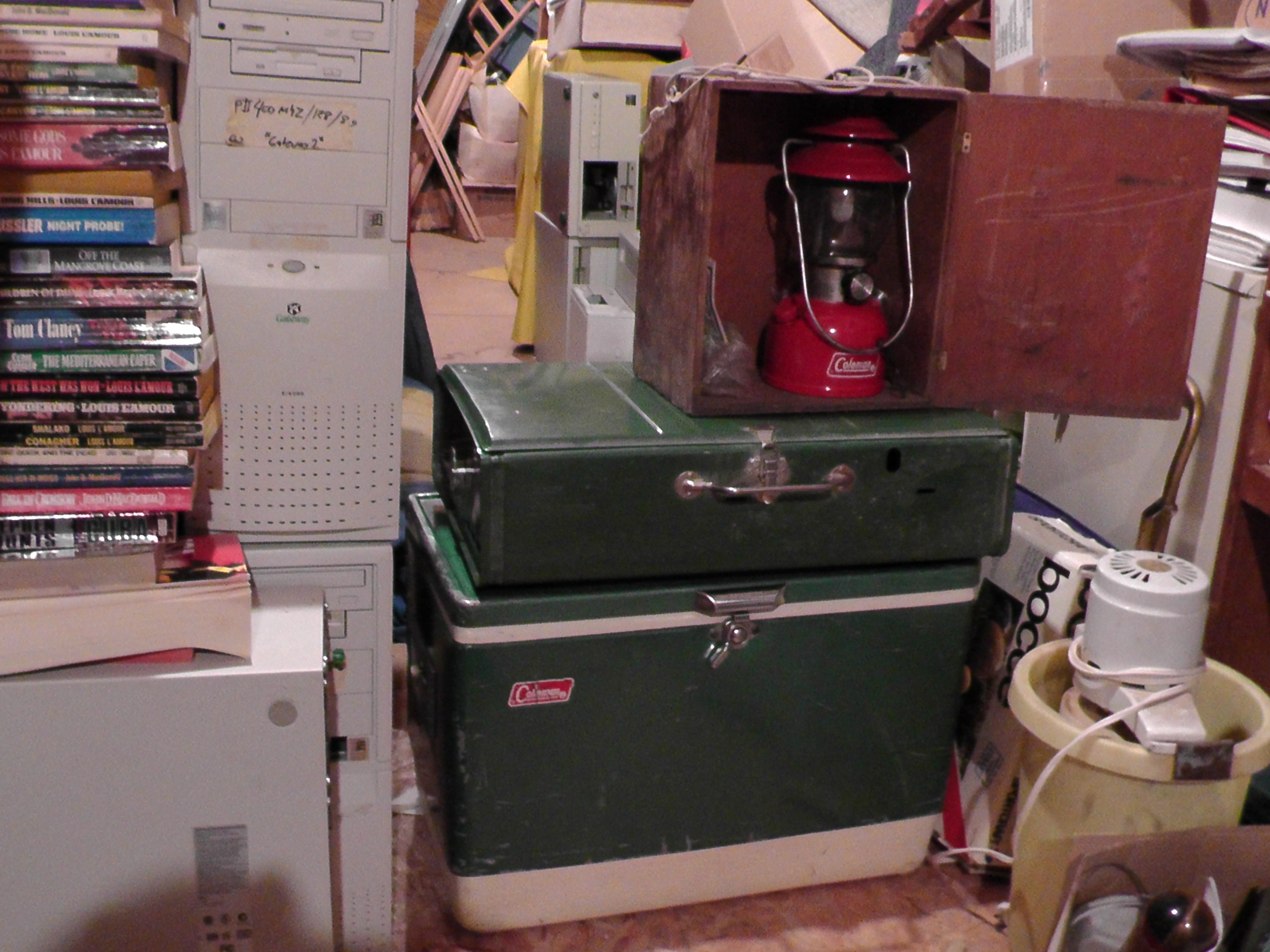
So, my preference here is to seek out used coolers instead of brand new. My family has always gladly lent me the red steel belted cooler I grew up using, but I wanted to secure one of my own. Obtained it last year, same manner of cooler, but in green. You can see it with the lantern and stove here:


The aforementioned red one is the same, save for coloration. In addition to being rugged, effective coolers (I've had them keep food cold for a week with only modest re-icing needs) they're also pretty handy. If you forget to bring a bottle opener, no worries there's one built into one of the handles. there's also something satisfying about the metal latch on them. Feels a lot more secure to me than some of the plastic toggles I've seen. Some models of this cooler even came with optional separators and partitions, and those tend to fetch a higher price with collectors. Me, I'm not interested in all that. i just fill it with my provisions and dump my ice in.

I'm also fond of the drink coolers. Built of the same powerful, reliable and rugged steel belted construction, I've obtained two from local garage sales. I'm sure we had one or two of them when I was a kid, but no one has the slightest clue what became of those. So I picked up a small green gallon jug, and a red two gallon. I'm fond of using them to carry water when I'm likely to be out and need to refill one of my metal bottles or camelbak, but the 5 gallon jugs would be overkill.


Its also great for mixing up some lemonade or powdered drink mix for when plain water grows monotonous. The contents flow faster if you unfasten the cap a little bit when dispensing from the spout, just make sure to re-seal it before moving it around again. For just a couple of people, a full jug of lemonade can last for days, kept cool by the insulation. Particularly, if you add a bit of ice before sealing it. I'd only employ the larger one with a bigger group of people or exceedingly hot conditions. 

Would I recommend them? Yes, I would. The vintage ones are definitely buy-them-for-life gear, and even if the quality has waned a little in the newer ones, they're still an excellent option compared to other products I've seen. 

Saturday, April 25, 2015

GEAR REVIEW: Gander Mountain Insulation Mat

Where I would take my closed cell foam pad backpacking with me, when I'm car camping I have a superior insulation and padding option! When I don't have to worry about weight and space, I can bring this with me, and it does a superior job of both keeping me warm and padding the ground beneath me. I used to just borrow the family's lone insulation pad and use that when camping, but it was appropriated during a move by my sister and I took the opportunity to obtain my own pad. I forget what brand the old one was, but the new one is a Gander Mountain Guide Series mat.

Both in terms of durability and space consumption, these mats are superior to the inflatable mattresses that many will utilize while camping. I have watched my friends go through mattress after mattress often waking up on the wrinkled remains of a mattress unable to hold an inflation, or perhaps just an inch lower than they started. I feel they raise you up needlessly high above the ground, take up more than their fair share of tent space and they require either heroic efforts, or an air pump to inflate. I'll pass, thank you very much.

Meanwhile the insulation mat I prefer requires only your lungs, and not all that much effort to inflate or deflate. Sets up in maybe 5 minutes, and puts about an inch of air between you and the ground. If you roll off or slide off? no big deal. They do an excellent job of keeping the ground beneath you from stealing away your heat, and with their inch or so of clearance, they smooth out a good deal of the roughness you might encounter in the ground. It is however, important to place your tent on as level ground as possible, because the mat can move in the middle of the night, and if you're on an incline, you might find yourself awake at 3am shifted to the corner of your tent, with your head pressed to the nylon as a badger waddles by and brushes against the top of your head. Not exactly the way I wanted to wake up, but one of many reasons I sleep with my buck knife within arm's reach.

No pictures today, all the photos I thought it might be visible in, it's eclipsed by my sleeping bag. Looks just like the picture here on their site though.

Would I recommend it? For a car camper, I definitely do. It's too big to bring backpacking with you, but it's great for base camp/car camping.

Wednesday, April 22, 2015

GEAR REVIEW: Military Surplus Alice Pack (Large)

I picked this up long before I started thinking about backpacking. I was just browsing the Military Surplus aisle at Fleet Farm, drawn in by the ammunition boxes they had displayed there. But $40 seemed a good deal for such a large, heavy duty backpack. So I jumped on it, just like that!

It's not really ideal for a long through hike though. By backpack standards it's heavy. And it comes from an age before ergonomic considerations were made for the guy who had to wear the pack. The waist support is somewhat rudimentary, and I didn't even figure out that it HAD waist support until I'd owned it for a few years. The webbing belt is just a little bit too short for me to wear comfortably, but it might work better for someone else. Due to its age, it pre-dates the MOLLE attachment standards, so there's a whole world of attachments that a newer military pack can take advantage of, but the ALICE misses out on.

It's nice and big though. Real big. And covered with pockets, thus lessening the need for those attachments. And these pockets are quite generous in size, I can fit my whole BioLite stove into one of them. That means it'll also take a good sized nalgene bottle or similar device. The interior is only divided into two different compartments though, an upper interior pouch and and the roomy main compartment. The Large Bag is probably capable of carrying way more equipment than you need or is good for your back, though you may want to pack it in compression sacks or gear bags to better segment and protect your load. The Medium bag is really more like a small bag with good PR, and I highly recommend seeking out the large bag instead. The main compartment closes with a drawstring, and then a flap covers the drawn aperture. Despite not being a MOLLE compatible bag, there's plenty of room to attach to the frame or bag with gear ties or similar.

The big reason I'm loathe to use mine is that my back and the frame don't quite agree right. One of the supports presses into me in a way that just isn't something I'd want to deal with while hiking for 20 miles in a day. Its great though, if I only have to go for 20 minutes to an hour, or if I need the storage capacity. And for the price, it's pretty nice. a MOLLE II bag or ILBE, more modern bags (themselves rough and tumble cousins of the modern hiker's bag) run over twice what I paid for the Alice. That said, $100-150 is cheap next to some hiking packs, and certainly a worthwhile consideration for someone who wants to get outfitted without paying REI prices.

Would I recommend it? For certain situations I would. If you need a bag to get from X, to Y and stay there, it's good. If you need a big bag, cheap, I would. If you're a masochist and don't want a more ergonomic bag, it'll do. It's not ideal for backpacking though. If you need a backpack that you can drag through hell, it'll answer the call.


Tuesday, April 21, 2015

GEAR REVIEW: Coleman Lantern

When you absolutely positively need to bring your own portable miniature sun on a camping trip, the answer is the Coleman lantern. Like their stove and their steel belted coolers, These have been a long-term staple of not just my camping experience, but my entire family's for generations. Infact, one of the lanterns I own is a vintage red coleman that used to be my grandfather's. It needs a bit of cleaning and repair, but I suspect once I get it cleaned up, I'll be passing it on to someone when my camping days are over. They're that reliable. In addition to the vintage one, I've got a silver one that I've had since my days in the boyscouts. This one, despite a nasty fall that made it a little picky about igniting is still going strong.

Like the Coleman Dual Burner Stove I reviewed here these lanterns run on either white gas or gasoline. Generally we've always run them on the coleman fuel which lasts longer in storage (I have seen cans of it remain useful for an incredibly long time) rather than gasoline from the pump. But having the option to use either one makes the lantern very useful. In the event of some sort of emergency situation, I know I can use it on whichever I have handy. While camping, if I run out, gas stations are a lot easier to find. It's also nice that it shares a fuel system with my car camping stove, and I only have to bring the one fuel source for both. Much like that stove, they seem to run forever on a tank of fuel. Even with the heavy use they can see while car camping with a group of friends, I rarely have to refuel them. with the clip-on mantles, I don't even have to worry about the hassle of tying them on.

These lanterns are a beacon in the darkness, and put to shame all of the lesser products I've seen. Whether I need the light to prepare food, administer first aid, read a book or play a game, you can easily drive back the night and flood the immediate area with light with one of these on high. I keep a cheap battery lantern around for reading and doing things in the tent but that absolutely pales in comparison. It may as well be a tiny LED keychain flashlight. I've played games, finished meals, told stories, and read books by the power of these personal suns, and though I always aim to arrive at camp and raise my tent before dark, if I HAD to set a tent up in the darkness, these lanterns would be perfect for doing so.

With such a powerful beacon though, there is the downside of drawing bugs. Not a big deal inside a screen tent, but I have seen everything from flies, mosquitoes and moths to grasshoppers and locusts drawn to its flame. Better the lantern than me though.

Would I recommend it? Emphatically! If you are car camping and do not own one of these, I would drop everything I am doing and proceed to REI's website to order one. You'll thank me. Your descendants will thank you. Your friends who camp with you will be amazed.

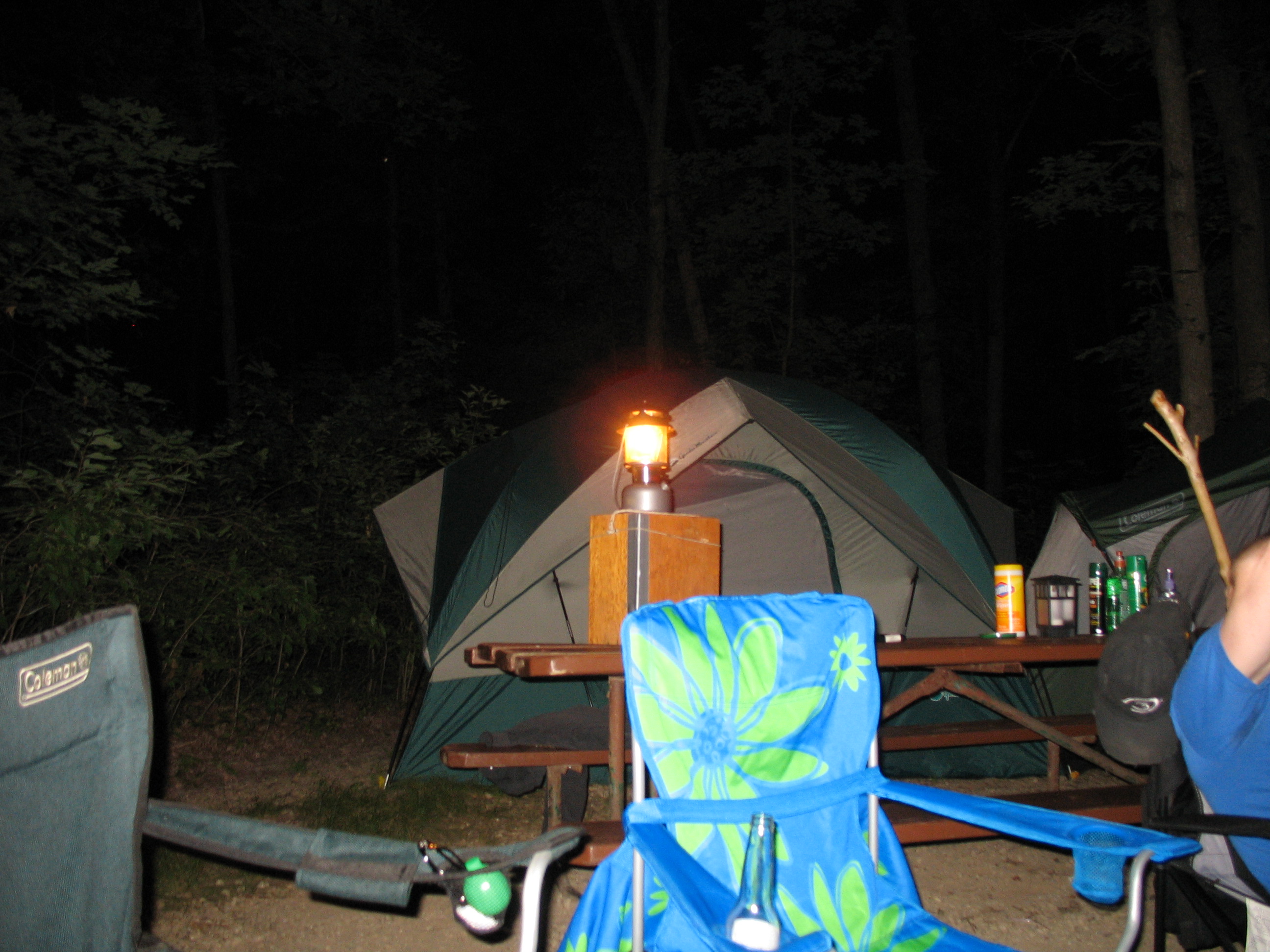
the picture doesn't do it justice, but here mine is (standing atop it's carry-box) at Blue Mound State Park


Unfortunately for most of my readers, the carrying case which serves both as a protective storage and transport method, as well as a fuel store and lantern stand is a Waldron family exclusive, designed and built by my Grandfather, who was a wood pattern maker. Inside is room for the lantern and a set of wood rails on the top which the nut atop the lantern slides into, holding everything in place.

Red Lantern with 2 burner stove and steel belted cooler:


Sunday, April 19, 2015

GEAR REVIEW: REI Base Camp 6 Tent

I've been car camping/canoe camping for longer than I can remember. Though I'm branching into backpacking, I'll always enjoy having the means to establish a strong base camp. This tent goes a long way towards doing so, it's right there in the name! My impetus for buying the Base Camp goes back to the worst storm I can ever recall weathering in a tent. I'd borrowed the old Gander Mountain family tent from my Dad, and as I was setting it up one of the aging carbon fiber poles (easily 20 years old at that point) chose this trip to give out. When carbon fiber anything breaks, it starts to splinter apart. Fortunately it wasn't a complete destruction, and I was able to use a combination of ducttape and spare tent stakes to brace the pole.

Had I known what a storm I was in for that night, I might not have forged onward at that point, but I saw no reason to quit. Now, a slack tent is far less waterproof than a taut tent, and even in it's repaired state, it was less than taut. So, my night wound up a bit more moist than I was prepared for. I'd attempt to improve the repair a bit, but ultimately I decided it was time for a new tent, one of my own. I'd recently begun using Reddit, and discovered /r/Camping, one of their camping related boards. I got a lot of good suggestions, but the one I liked the looks of best, was the REI Base Camp 6. Bob (My Dad) had mentioned a number of times, the REI store down in Madison, suggesting that we could probably get a replacement pole segment for the tent there when all the locally available repair kits turned out to be the wrong size...

I wound up getting the 2013 model Base Camp 6 tent, a membership, AND some replacement pole parts from REI. This wound up being a cascading repair in which Bob and I rebuilt the Gander Mountain tent pole, using the wrong-size-kit, I fixed a pole for a more modern coleman made tent owned by my friends Jim and Lindsey, and I used some old pieces from the tent pole that we had rebuilt to repair a pole for my cheap screen octagon.

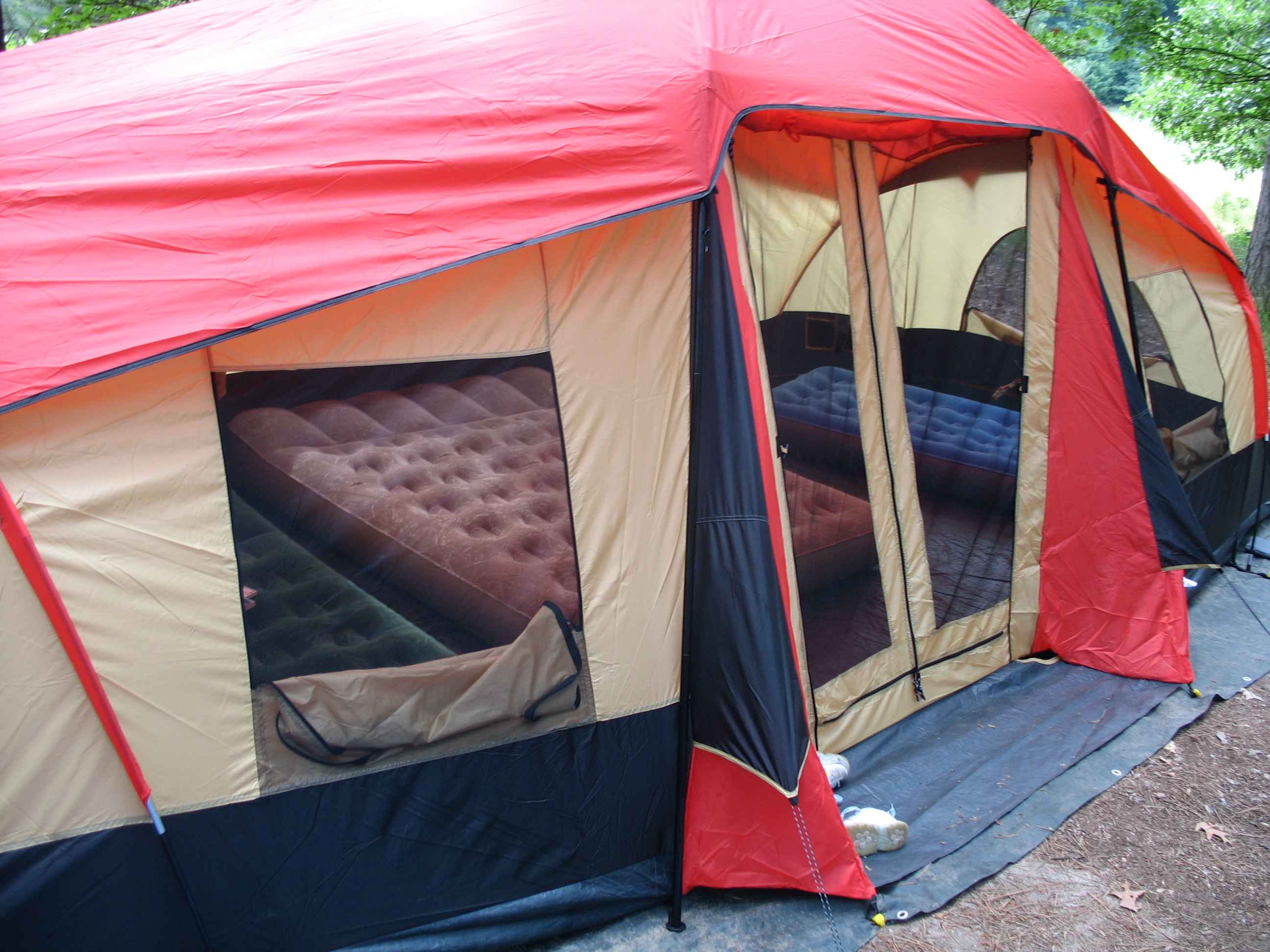
But on to the Base Camp 6! This is a very spacious tent. Now, REI rates it for 6 people, but that's people-only, no gear, and you had best be pretty close to these six people. More realistically, it's a tent for 3-4 people who take up a lot of room, 5 people who are fairly close to one another, or 6 people who don't move much in their sleep and/or who might be okay to cuddle with one another. It's also possible that REI intended you to stack these people vertically, because the base camp has a ton of headroom. I'm 6'2" when I stand up straight and I can walk a small circle in the middle of the tent. I really enjoy that, not having to worry about hitting the walls/ceiling when I move around inside the tent.

The poles on the Base Camp are aluminum, and feel very sturdy to me. They are perhaps a bit heavier than carbon fiber would be... but for car camping, weight is a low priority to me. They have full pole sleeves rather than split sleeves, so there's no having to lean over, kneeling on the tent itsself as you're raising it. and you can raise it solo, at least I could, if you need to. Two main poles provide the primary support, and two secondary poles fully extend the tent, giving it it's full size and structure. One final pole extends the rainfly over the end of your choice, creating a small vestibule. Now, the rainfly is very thorough, covering the tent right down to its toes. It does an excellent job of keeping interior dry, even though high speed wind and rain. Those poles do a great job of keeping it upright even in adverse conditions. This was one of my primary criteria when I asked for suggestions, a tent that can weather any storm I have any business being out in. It's a 3 season tent, so not intended for the winter (and I have no intent to camp in wintertime) and realistically there's only so much weather a tent can take, but if things are THAT bad, I should probably be taking cover in a far sturdier structure.

That very thorough rainfly is also excellent at trapping warmth in the tent. There are a pair of vents at the top, and the front and back of the rainfly can be unzipped and rolled up in good weather to let air in. Great thing about the vents is that they can be opened from inside, through a pair of zippered apertures. No need to go outside just to shut it if the weather changes. Protecting the tent from below, is a fitted footprint intended for use with the Base Camp 6 Tent. I am SO glad that I bought the footprint, it is far more convenient than trying to fit a tarp to the right size. Makes teardown more convenient (I have a clean place to pack the rest of the tent up from) and keeps the bottom of the tent clean. Super happy with buying the footprint. And speaking of packing up not only is there room in the tent bag for the footprint, but also that bag has a pair of shoulder straps that allow you to wear it like a backpack. Nothing I'd want to wear for more than ten to fifteen minutes, but more than enough to easily reach a site that I couldn't park directly in.

Only changes I'd make are that I would enjoy some manner of side window option, and that I find myself resorting to using a set of Nite-ize Gear Ties to secure the rolled rainfly door , which otherwise is a bit reluctant to stay where I tell it to remain. a bigger vestibule wouldn't be bad, but as it stands, there's more than enough room to don/remove shoes, even sit in a bag chair to do so, maybe store some minor gear. If you remember to only zip one side of it, and rely on the velcro on the other, you can easily respond to things such as driving off a meddlesome nocturnal raccoon, or the call of nature in the middle of the night, without much entry/exit fuss.

Well-built, spacious enough to acommodate a family or a small group of friends on a trip, the base camp 6 will be my wilderness shelter on many an adventure to come. I highly recommend it.

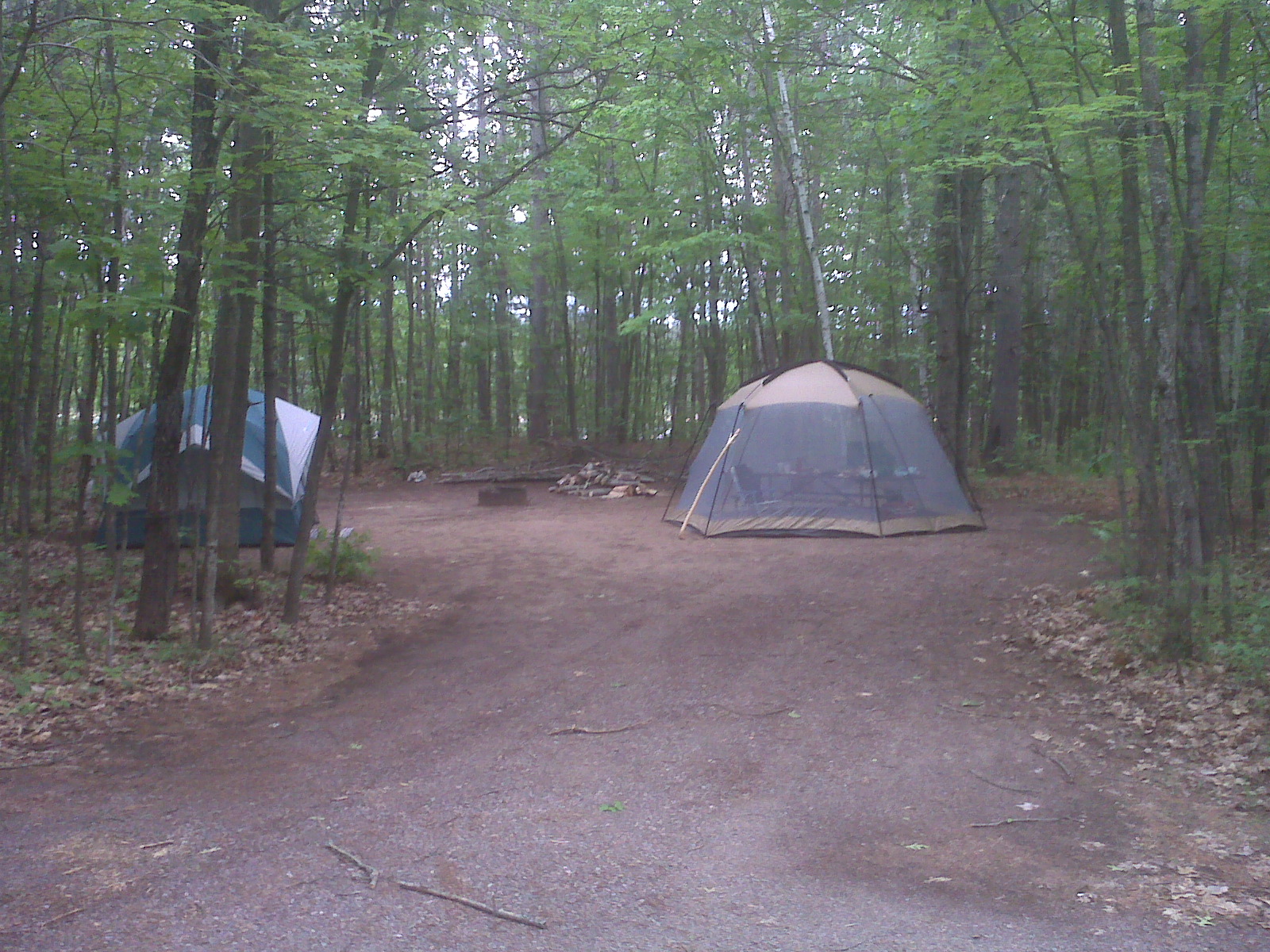
With the screen hexagon, Van Buren SP, Michigan:


Inside, with my LL Bean Synthetic bag:


Airing out in the yard, no rainfly:


Rainfly on, but not guyed:


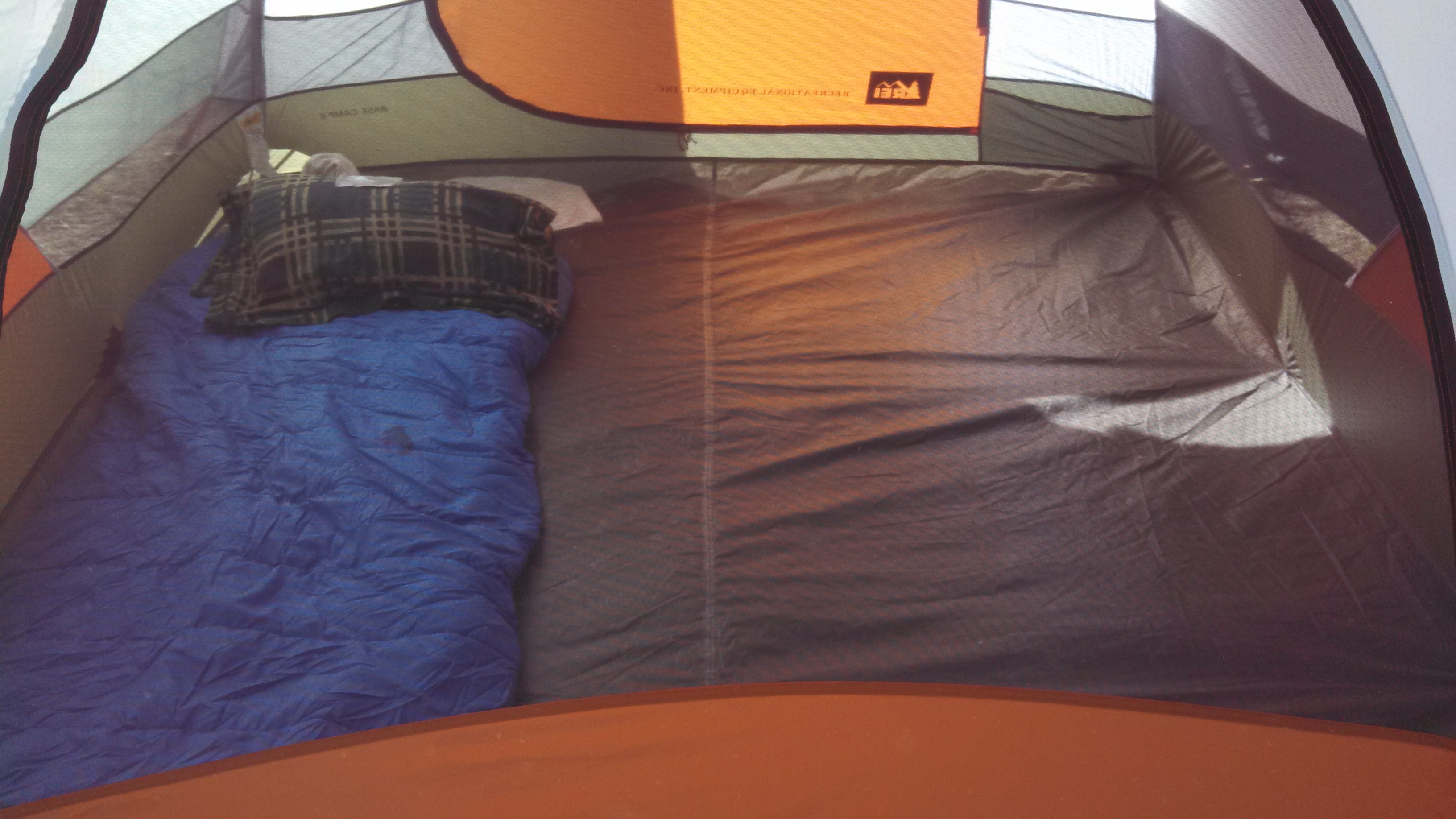
Inside, Empty:


Back of the tent, Wildcat Mtn SP:


Front of the tent, Wildcat Mtn SP:


Thursday, April 16, 2015

GEAR REVIEW: First Generation Amazon Kindle

You get this with technology sometimes, where the first generation of a device often has superior construction to its descendants, and the kindle is one place in which this is true. Much like Apple's successful iPod mp3 player was not the first mp3 player, the Kindle was not the first digital book reader to reach the market. Both did however bring the technology to the masses. I jumped on during the first generation of kindles, and never really moved on ahead. I've got my reasons though. It's not perfect, the square corners that I prefer the look of are, at least I'm relatively certain, part of the reason I keep breaking screens. I think it works like airplane windows, where a curved edge is stronger than a square corner when handling a load. A shame, really, I prefer the look of the first generation's corners. The buttons are also a little easy to accidentally toggle. I do however still like the layout and number of buttons better than subsequent generations of kindle have offered. The one feature I really wish the first generation had that was added later on, is the option to buy one in black. the white plastic can be a little difficult to look at for extended periods of time in bright sunlight. And, again, as I've mentioned they are a bit fragile, I wouldn't mind reducing that.

So, why then, I am sure you are asking, do I prefer the first generation to all the others even in light of those flaws? First off, subsequent versions of the kindle have the battery soldered to the circuit board. The non-removable battery is a down-side for me because I've collected a number of spare kindle batteries AND I've been known to exhaust the batteries. It's nice to be able to replace them. It DOES require it's own charger, rather than utilizing the mini usb port that you can use to feed data onto the book, but I consider that a small price to pay for the removable batteries. Since this is a wilderness blog, the removable batteries are a salient point, I often charge two or three of them before a camping trip and bring them along. With those three batteries, I can read heavily for the better part of half a month without having to recharge. Second, in addition to the removable battery, the first generation has a removable memory card. Flash memory that devices like this use is relatively young. It can be burnt out with a sufficient number of writes and rewrites. Are you likely to reach this limit on any device short of a solid state drive for a PC? not terribly. In a decade and a half, I've burnt out one flash drive and it was one of the first ones I ever owned. But still, it's nice not having the memory built right in. Second generation and onwards, the memory is non-removable. First generation includes a SD Card slot. If I need to, I can pop the card right out and plug it into my laptop, or if I break a kindle, I can pop it right into the new one, the whole library right there on the card.

I also like the keyboard. Some of the newest editions of the kindle don't have a keyboard. I used to use my kindle as a poor man's smartphone, making the built in 3G and Browser access my gmail account. I've got a smartphone now, and this is really hard on the battery so I don't do it anymore, but it's been handy before and I'd like to retain the option. Additionally, the 3G isn't a given anymore the way it used to be. Wifi is more ubiquitous than it was a decade ago, and most phones are coming with a whole additional G over the kindle's dated data connection. I definitely prefer the E-Ink screen over the color LCDs, and a non-touch screen like the first gen has over the paperwhite's touch sensitive screen. Add to all of this that First Generation Kindles can be had online for roughly $50 compared to the two to four times that you can spend on newer options and it's tough to argue with!

Now, I believe in being prepared so in addition to my kindle I tend to carry at least one paperback with me when I travel. I know there are some people who strongly prefer the printed page to e-ink readers, and while I understand their passion for the texture and smell of a real book, I don't share in it. To me, the ability to carry hundreds of books with me vastly outstrips the visceral romantic aspects that these literary hipsters espouse.

Mine's on the left. The right is a much newer model. Shows how the device has changed over time. (newer kindle courtesy of the amazon employee who rode with me for a leg on the train last summer)


Tuesday, April 14, 2015

GEAR REVIEW: Coleman Two Burner Stove

Definitely a piece of Car Camping equipment, this. Big, Green and Metal. These Coleman stoves have been a camping staple in our family for ages. Designed to run on white gas (lantern fuel) or gasoline, these stoves are excellent whether you're cooking for two or twenty. The fuel is stored unpressurized, so you've got to pump before use and vent when done and cool. But a little fuel goes a LONG way in these stoves. Ideal for cooking up a pack of bacon, and a box of sausages and batch after batch after batch of pancakes. Or cooking up chili or stew on a cold day. But it's not just for the big jobs. It's equally capable of smaller tasks like heating up some water for a mountain house or a cup of instant cider.

The stove is green and built from aluminum and steel. the fuel tank stores down inside of the housing when not in use, and hangs from the front when you're cooking on it. 30-50 pumps gets you plenty of pressure, and if you start to have problems with the flame, its easy to pump a few additional strokes while in use.  As I said above, they take gasoline as well as lantern fuel, but I've never actually had to resort to gasoline. We've always had the naptha/white gas/lantern fuel around for the equally impressive Coleman lanterns. The burner is lit by match or lighter, you'll want to have the flame burning before you turn the valve, not the other way around.  If you need both burners, it's as simple as starting up the main burner, turning up the gas, starting your second match, holding it near the burner and opening the valve for the second burner.

This is one of those Buy It For Life items. If you're going to be car camping, or establishing a base camp of some kind, you will not regret buying this. I inherited mine from my grandfather, and it's in beautiful shape. The gas knob has been replaced with a wooden knob of his own making, but the stove is otherwise stock. Its twin, owned by my father has been a camping staple for the family since before I was born. Many a breakfast has been cooked for me on these stoves.

Now, while this IS a Car Camping item, it is very similar to the Coleman Peak stoves that they market towards backpackers. Somewhere in the attic, from my days in the boy scouts, I've actually got one of those. I've gone looking for it, but can't find it. If I ever unearth it, you can be sure I'll review it here. What possible reason, you ask, would you have to carry something so relatively bulky out on the trail? Weighing in at two pounds, that noise you hear is the collective whimpering of ultralight hikers pained by such blasphemy. But I'll tell you. While I've heard of hikers scrounging for alcohol to burn, and I've heard of hikers having to worry about finding isopro canisters. But there's always going to be gasoline where the trail meets civilization. And with the fine control and long burn time on these stoves, you can confidently cook slow-cooking or simmering dishes without a worry about your fuel. You can also tell them that in 1991, it was considered plenty lightweight.

Would I recommend it? The two burner, for car campers? Most definitely. You'll never have to worry about another stove again, unless you branch out into backpacking. Would I recommend the Coleman Peak for backpackers? Well... If you're trying to save a buck, and can get one for cheap, sure! It'll be a lot easier to stay in fuel and cook knorr sides. Probably wouldn't recommend buying one new though. If you've got the cash and weight for a Peak stove, you've probably got the cash and weight for a biolite or a $6 canister stove and a bunch of isopro canisters.

Folded up before use!

Set up, you can see the replacement knob my Grandfather made:


Pump for building gas pressure:


Lit:


Wednesday, April 8, 2015

GEAR REVIEW: myCharge Peak 6000 and Mophie Powerstation XL

As one might infer from the fact that I'm blogging about all of this, I exist at a crossroads between the love for the outdoors and computer geekery. This means it's pretty darn likely that I'll have occasions where I'll want to power a device out in the wilderness. Even if I disconnect and keep my smartphone around just for navigation, weather and emergencies, I'll need a means to power it. I've got an inverter in my car, but I'm not always with my car. So, I've got two battery packs, the myCharge Peak 6000, a 6k milli amp hour battery, and the Mophie Powerstation XL, a 12k mAh battery.

The first, the myCharge Peak 6000, I picked up in 2013, for a trip I was planning to take. I was traveling by train, to visit a friend in Oregon and I didn't know if the train would have outlets or not. The myCharge Peak 6000 was the strongest battery I could find at the local best buy on short notice. Fortunately for me, Amtrak's Empire Builder has a pair of outlets right beside the seat, and the battery wasn't needed for that part of the trip. It did however come in hand wandering around Eugene Oregon and sometimes spending the night someplace where I didn't have a charger with me.

The myCharge Peak has numerous outputs, a built-in micro USB connector for charging most android devices or other electronics that take a charge over micro USB, an iPod connector for the older models of iPod, a USB Port to attach a cable that fits connectors other than those two, and two input methods, a built in USB cable to recharge the Peak, and a pair of prongs that flip out from the underside, and plug directly into an outlet. Impressively, the rubber flap with an embedded magnet that shields the charging USB plug has endured my tendency to flip it open and shut when bored. The myCharge Peak has a multi-function button that serves as both an on/off switch, and a information button. if you hold it long enough, you can force the unit off. if you press it while the unit is off, it powers back on. if you press it briefly while it is on, it will report the status of the battery. By default this is done with both light and sound. a recessed button can be pressed with the help of a paperclip or pin, and the mode by which it informs you can be changed if you don't want the battery to talk to you.

The second, the more powerful Mophie Powerstation XL was purchased for roughly the same price as the myCharge. You see, I had misplaced the myCharge, and another trip was coming up (Again, to Oregon). I decided that the thing that could best help me find what I had done with my old battery pack would be to buy a new one and invoke murphy's law. It did not turn up immediately, in fact it didn't turn back up until February of this year. I was headed out for a birthday celebration when I grabbed a leather jacket I hadn't worn in some time... Infact, not since my previous birthday celebration. But it was curiously heavy on one side. Digging into the pocket, I found the old battery pack hiding in there.

While the Peak is bristling with connectors the Mophie is comparatively spartan. It has three connectors, two of them usb ports that will accept the USB cable of your choosing and one micro USB input port, for recharging the battery pack itsself. It comes with nothing in the way of instructions and only a USB A to Micro USB cable. Initially I had mistaken the micro USB port for a security lock port, and thought I needed some manner of USB A to A cable to charge it. After a bit of furtive searching online I determined no, that smaller hole WAS a micro USB port, and that must be how it recharged. Carrying twice the stock charge as the myCharge pack, I do find myself going longer between recharges on the Mophie. The lack of built in connectors is a bit of a bummer, but the slightly smaller size of the unit can be nicer for fitting into a pocket.

Would I recommend them? Probably. I think there are more economical battery packs now available, and perusing the camping section of a local fleet farm store I did see a Coghlan's Battery Pack that I thought rather desirable. I don't know how well it works, but like the myCharge, it's 6k mAh, includes a small solar panel, and has a crank charging function as well. I don't imagine it crank-charges very fast, but every little bit helps.  I definitely recommend having a battery pack or two of some kind, if you're going to use your electronics out in the wild. Especially if you're going to charge off of a BioLite Stove. Doubly so if you wanted to, say, use a power pot on a biolite stove and charge the battery at both ends, as it were.

Buy the myCharge Peak 6000 Here!

Buy the Mophie Powerstation XL here!

Buy the Coghlan's Power Pack before me, and tell me if it's any good!

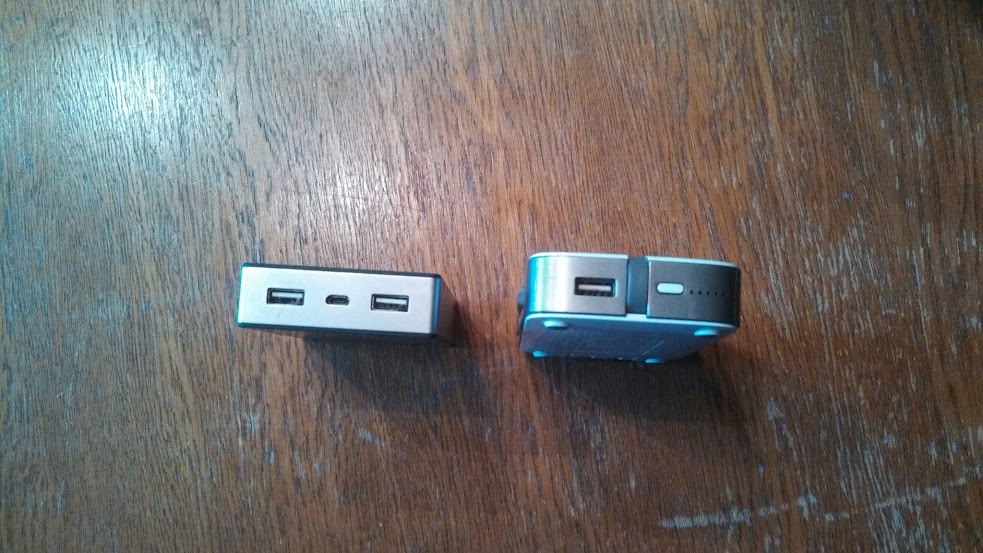
Mophie in Black, myCharge in White:


Tuesday, April 7, 2015

GEAR REVIEW: Ozark Trail Screen Hexagon

There's a school of thought that aims to "buy it for life" that aims to buy the most durable, longest lasting gear regardless of price. If you're looking for a screen tent that fits that ethos, abandon ship now. Infact, flee any time you see the words "ozark trail" as the brand. Ozark Trail is Camping for "Wal-mart." and any prejudice you have on the matter of quality as regards their products is mostly justified. Now, while I talk a lot of trash here, I have made use of a number of things from the wal-mart camping aisle. If nothing else, their ubiquity is somewhat useful. I tend to buy things that are not something I expect to last forever. There's no need to pay more than $10 for a foam roll, nor am I likely to get a significantly better can of bug spray from elsewhere on short notice.

When my friends and I started out doing regular summer camping trips, I mostly used the old family equipment. We had an old screen tent from K-Mart that has lasted remarkably well save for a few flaws. First and foremost is the entirely nonfunctional zipper on it. Does not exactly do very well for keeping bugs out. Second of all, it's been around longer than I can recall and I doubt the waterproofing is all that potent any longer. Third, it's a nightmare to transport. Takes twice the room of either of the tents I own, or the aforementioned screen hexagon. That said, it is sturdy as all get-out. I will be shocked if the titular hexagon is still in service as long as this has been. This is the "circus tent" as Jim and I dubbed it.

So, when I saw for all of $40, a screen tent that I could bring along in place of the Circus Tent, I jumped at it. I figured for $40, if it lasted me 3 camping trips, I'd be plenty happy. Well... it lasted me 3 camping trips, and then some... but I don't know that "plenty happy" was the right term to assume I'd be. First off we were off to a great start, when the first time I deployed the tent the shock-cord in one of the three main poles snapped. Rather than run to the store for a new cord, I just duct taped the pole segments together. Kept doing that for a long while, actually. Until i had spare parts for tent pole repair around, and I got around to rebuilding the pole. Second of all, the hexagon tapers a little, like a thimble. Given the generous size of most Wisconsin State Park picnic tables, and the generous height of the blog's author, that means that if I'm standing in the tent working the stove or even moving in and out of it, I spend a lot of time brushing the walls. Shorter people, or smaller picnic tables might change this dynamic a bit, but it's an awkward fit for me.

So, what's nice about it? Well, it has outlasted my expectations. Cost to own this thing has been about $3-4 per year so far, since I've had it for over a decade. it does a decent job of keeping its contents low-bug and low-moisture. I've seen it go through some mildly gnarly weather without crumpling (a surprise given the cheap quality of the top poles) and it's not so hard to pack up. if you take one of the ceiling poles out, the remaining poles hold a rectangle shape that makes it easy to tuck things into and fold up, and the lower half poles, the ones with metal chains inside those are pretty sturdy.

Would I recommend it? Not without disclaimers. Fortunately, or unfortunately, I haven't seen its like in stores since. I haven't seen them cheaper than $100 even. So long as you know what you're getting into, and keep your expectations low, I say go ahead. It's not like you're going to be spending the night in it, and if something happens to it, well, for $40, it's pretty much disposable.Camp stove has some sort of flare up, or somebody backs the car into it, you've probably already got your money's worth out of it. I sure wouldn't pay any more than that for it though. And if you can suggest a better one that's worth the money (preferrably one that's square/cube-like, and not a canopy with add-on walls) I'm looking for better.


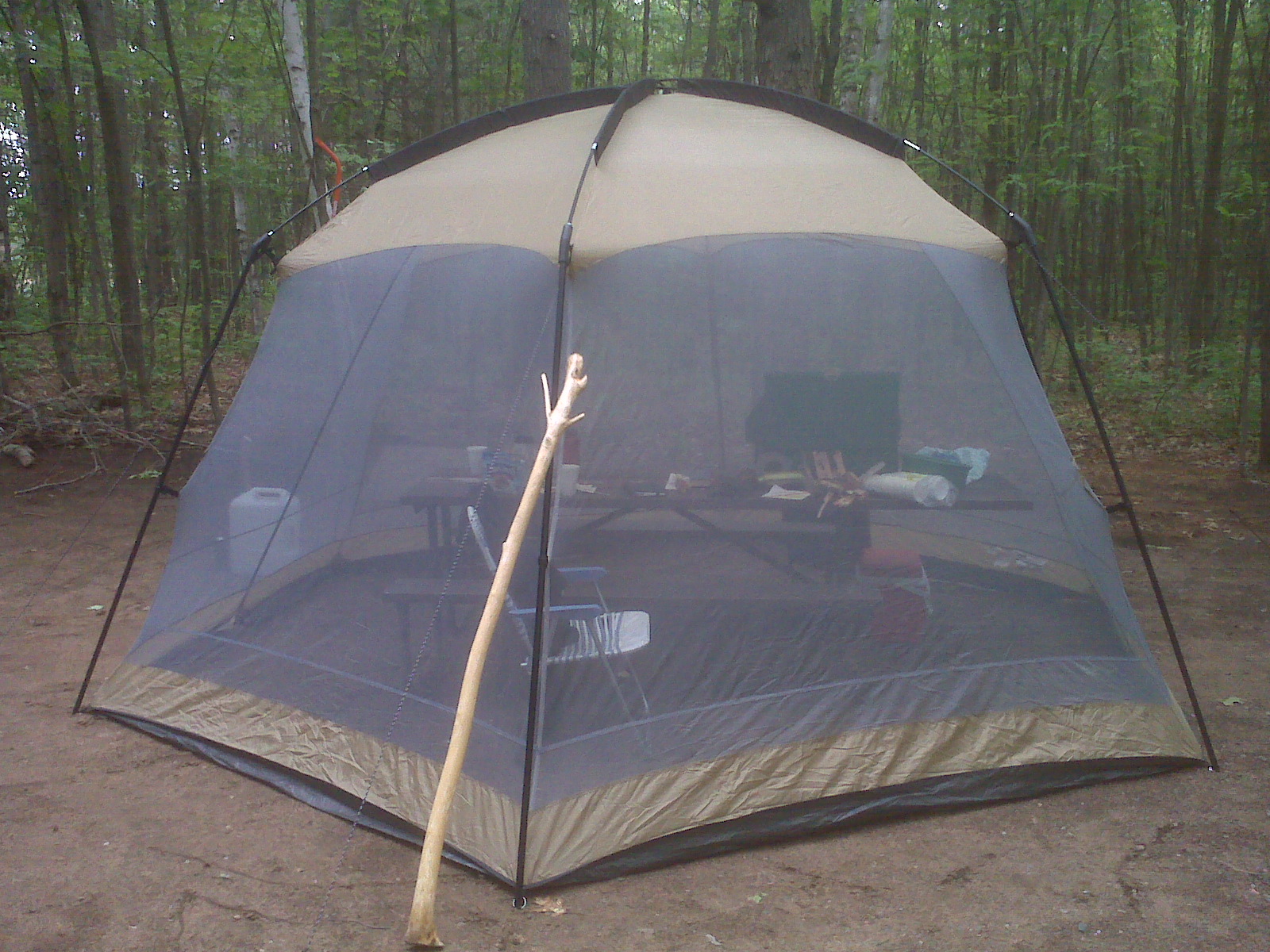
In Action, at Firefly Lake:


Friday, April 3, 2015

GEAR REVIEW: Buck Knives (105 and 110)

A cartoon bartender once told me that having two knives was pretty terrific. I think he's right. For a number of years, I've been carrying one or both of my buck knives while camping. The first is their "Pathfinder 105" fixed-blade knife and the second is their "Buck 110" folding knife. The Pathfinder is my favorite, in no small part due to the fact that it was a gift to me from a client. It had been her husband's knife and as he had passed away, she wished to see it continue to see use out in the wilderness, and gave it to me after one of our tutoring sessions. I'd mentioned that I was going camping that weekend, and she had just lit up as we talked, and gave it to me as a gift. And I absolutely love this knife. It's far from the lightweight wonders that some backpackers prefer, but I enjoy having a nice sturdy knife, and don't consider the weight a waste.

This knife has done everything from strip birch bark from fallen logs to whittle my home-made walking stick, to chop veggies for the camp's dinner. It has taken to every task I have given it with remarkable aplomb. You can see me using it to strike a fire in a couple of previous posts. The simplicity and strength of the blade make it a very appealing tool, and so long as we're considering the weight, it's lighter than it's brother, the 110. Easier to clean too, as there are no nooks or crannies to worry about, and the handle is a very smooth and clean surface. Buck offers both smaller fixed-blades than the pathfinder's, and larger too, but I find the 5" blade on the pathfinder long enough for any task I've actually wanted from my knives, and the thinner width of the blade is convenient for getting the knife into tighter quarters. So, whether it's cutting open a freshly cooked pork loin or the weapon I reach for when I feel a badger nuzzling my skull at 4am, the Pathfinder is the knife I reach for.

So, you might ask "why the 110?" and there's a couple reasons. First off, like Moe said, having two knives is pretty terrific. Second of all, is how scatterbrained I am. Turned my place upside down, could not for the life of me find what I'd done with my pathfinder. Had a camping trip the next day, and I was NOT going to go into the woods with no knife. So, I went looking around and found a good deal on the 110 folding knife. Third, my friends have caught on. They know I have awesome knives. So it's nice to be able to lend one out. Fourth, the 110 travels a little better when you're not out in the wild. It's a bit more unobtrusive in a packed bag. 

Though the 110 is not a fixed-blade knife, I've never had reason to doubt it's locking mechanism. I've used it for, or seen it used for, nearly everything my Pathfinder has done. It has done so quite well, and until my friends read this post, I don't think they'll have even realized that I've been hogging the pathfinder to myself. 

In addition to the knives, I've also picked up a small whetstone to keep them sharp. I ordered it at the same time I obtained a replacement sheath for my pathfinder, and it does a great job of keeping their edges keen. Came with a little belt pouch, though I find that I tend to use it more at home, than in the field.


Bottom Line, would I recommend these? Absolutely. Not if you're going ultralight, but I love my knives.

Wednesday, April 1, 2015

TRAIL MEALS: Spam and Cheesy Noodles

Today, I went to a different grocery store than I did two days ago, to see what different offerings they might have, that would make good trailfood. I happened upon a packeted slice of spam, a Spam Single, as it was called. The prospect of a non-fish meat in one of those packets was pretty appealing, so I snatched it up, and a bag of cheesy noodles to combine it with. Now, the directions for the noodles called for powdered milk and margarine, but lugging those out into the wild is impractical, and going without them sounded like a recipe for a disappointing "cheese" aspect to the noodles. But, this was not insurmountable. Picked up some powdered milk and olive oil, to use in place of the milk and margarine. I didn't measure them, I just eyeballed it, sprinkling in a small amount of the milk powder, and a couple small pours of the oil. Figured that on the trail, I wouldn't be likely to be very scientific about it.

I used yet another camp stove from my collection for today's meal, a green two-burner Coleman camp stove (suitable for car camping) that I inherited from my grandfather, and near-identical to the one I always borrowed from my father over the years. I used this, because I knew that cooking the noodles would be fuel-intensive, and I was right. I would not want to cook one of the pasta sides on a pocket stove, it would rip straight through your fuel stores like a swarm of piranha. There IS however a backpacking version of this manner of stove, Coleman's peak line. Twenty years ago it passed for "ultralight" but today even my BioLite beats it for weight. Still, since these Coleman stoves can take gasoline or lantern fuel(white gas) it means you're unlikely to be unable to resupply on fuel in town. Years of use tell me that a full tank will burn for quite a long time. If you've got a large group to cook for, and people to distribute your load with, I could see justifying bringing a stove like that.

It took a good long time for the noodles to soften, and I used the pot lid to chop the spam up and pan-side-up hold it above the water, heating it while the noodles cooked. It took a lot of babysitting, stirring the noodles to keep them from fusing to the floor of the pot. Even after a long time boiling, and a few minutes to set, it was still a little liquidy. Tasty though! Stirred the spam into the noodles and chowed down. Very tasty, almost worth the amount of babysitting and fuel it consumed to produce it. I would definitely eat this on the trail, but for next time, I'm going to try and find some cheesy rice instead. It's likely that would cook a lot faster and take less fuel and effort.


Bottom Line, Would I recommend this? Yeah, but not if fuel's going to be scarce. It was tasty, I'd eat it again, but I'd be worried about my canister stove having enough life if all my meals took that much cooking. It also means more work cleaning up, the rice meal was a lot more pot-friendly than the noodles were.